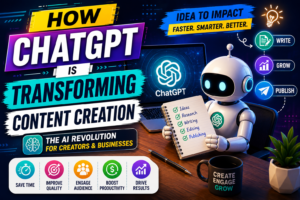
How ChatGPT Is Transforming Content Creation Across the Digital World
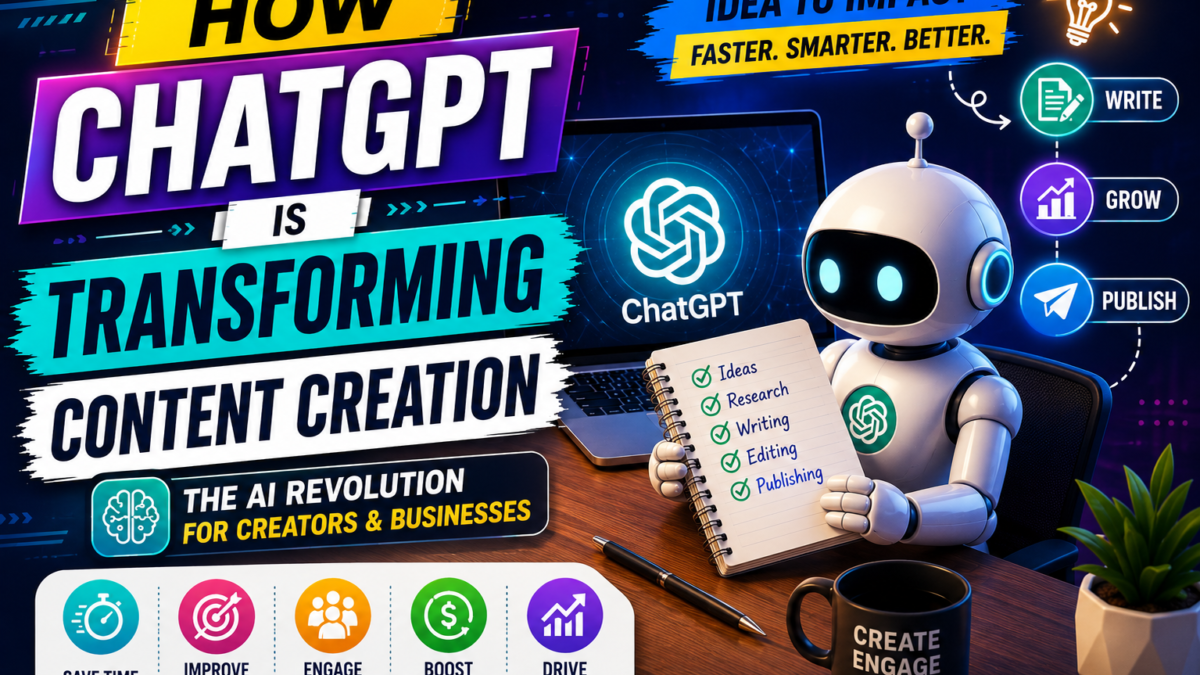
A New Era for Content Creators
Artificial intelligence is rapidly changing the way content is created, and ChatGPT has emerged as one of the most influential tools in this transformation. From bloggers and marketers to students and business owners, people are using AI-powered tools to create content faster and more efficiently than ever before.
As demand for digital content continues to grow, ChatGPT is helping creators streamline their workflow while maintaining productivity.
Making Content Creation Faster
One of the biggest advantages of ChatGPT is its ability to generate ideas, outlines, and drafts within seconds. Tasks that once required hours of brainstorming can now be completed in a fraction of the time.
Content creators use ChatGPT for:
- Blog article outlines
- Social media captions
- Email marketing campaigns
- Product descriptions
- Video scripts
- Content research assistance
This allows creators to focus more on strategy and creativity.
Helping Small Businesses Compete
Small businesses often have limited marketing budgets and resources. ChatGPT provides an affordable solution by helping businesses create professional-quality content without hiring large teams.
Benefits for businesses include:
- Faster content production
- Improved customer communication
- Consistent brand messaging
- Enhanced marketing efficiency
As a result, businesses can maintain a stronger online presence while reducing costs.
Supporting Creativity, Not Replacing It
While some people worry that AI could replace human writers, many experts view ChatGPT as a creative assistant rather than a replacement.
The tool helps generate ideas and draft content, but human creativity remains essential for storytelling, emotional connection, and brand authenticity.
Successful creators often combine AI-generated suggestions with their own expertise and personal insights.
The Impact on Digital Marketing
Digital marketers are increasingly using ChatGPT to improve productivity and content performance. By reducing repetitive tasks, marketers can spend more time analyzing data, understanding audiences, and developing innovative campaigns.
Popular applications include:
- SEO content creation
- Audience research
- Ad copy generation
- Content planning
- Marketing automation
Looking Ahead
As artificial intelligence continues to evolve, ChatGPT is expected to play an even greater role in content creation. Its ability to save time, increase efficiency, and support creativity makes it a valuable tool for individuals and businesses alike.
Rather than replacing human creativity, ChatGPT is transforming how content is produced, allowing creators to work smarter, innovate faster, and meet the growing demands of the digital age.