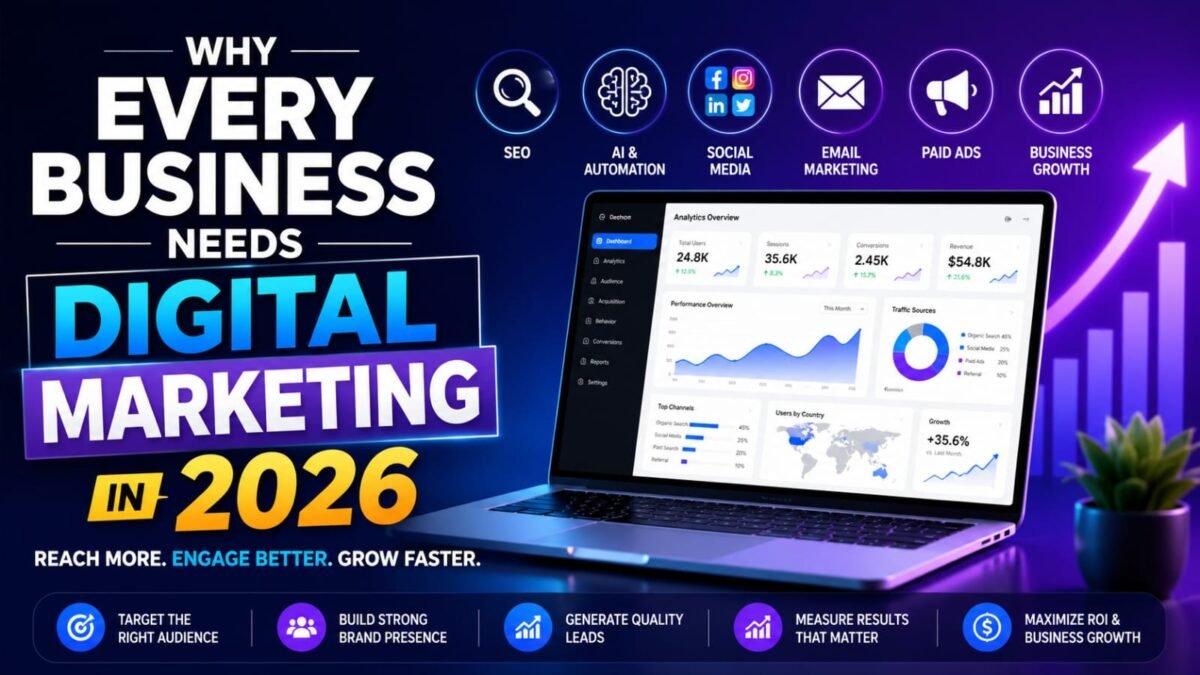
Why Every Business Needs Digital Marketing in 2026
In 2026, the business landscape is more digital than ever before. Consumers no longer rely solely on word-of-mouth or traditional advertising to make purchasing decisions. Instead, they search online, compare reviews, browse social media, and expect businesses to have a strong digital presence. Whether you’re a small local business, an e-commerce store, or a multinational company, digital marketing has become essential for sustainable growth.
1. Customers Start Their Buying Journey Online
Today’s customers search for products and services online before making a purchase. They read reviews, compare prices, and visit websites to learn about businesses. If your company isn’t visible online, you’re missing valuable opportunities to attract potential customers.
2. Build Brand Trust and Credibility
A professional website, active social media profiles, customer testimonials, and valuable content help establish trust. Businesses that consistently share helpful information and engage with their audience appear more reliable and credible than those with little or no online presence.
3. Reach the Right Audience
Unlike traditional advertising, digital marketing allows businesses to target specific audiences based on demographics, interests, behavior, and location. This precision helps companies spend their marketing budget more efficiently while increasing conversion rates.
4. Affordable Marketing with Better ROI
Digital marketing offers cost-effective solutions for businesses of all sizes. Search Engine Optimization (SEO), social media marketing, email campaigns, and content marketing can generate long-term results at a fraction of the cost of traditional advertising methods.
5. AI Has Transformed Marketing
Artificial Intelligence is reshaping how businesses connect with customers. AI-powered chatbots provide instant support, personalized recommendations improve customer experiences, and automation helps businesses manage campaigns more efficiently. Companies that embrace AI gain a competitive advantage in today’s market.
6. Social Media Influences Buying Decisions
Platforms like Instagram, Facebook, LinkedIn, TikTok, and YouTube have become powerful marketing channels. Businesses can showcase products, build communities, collaborate with influencers, and communicate directly with customers, creating stronger brand relationships.
7. Data-Driven Decision Making
One of the biggest advantages of digital marketing is access to real-time analytics. Businesses can monitor website traffic, advertising performance, customer behavior, and conversion rates. These insights help marketers optimize campaigns and maximize return on investment.
8. Stay Available 24/7
Unlike physical stores with fixed operating hours, your website and digital platforms work around the clock. Customers can discover your business, browse products, and even make purchases anytime, increasing convenience and sales opportunities.
9. Stay Ahead of Competitors
Businesses across every industry are investing in digital marketing. Companies that fail to establish a strong online presence risk losing customers to competitors who are more visible, accessible, and engaging.
10. Long-Term Business Growth
Digital marketing isn’t just about generating quick sales. It helps businesses build brand awareness, improve customer loyalty, strengthen relationships, and create sustainable growth over time. Strategies like SEO, content marketing, and email marketing continue delivering value long after they’re implemented.