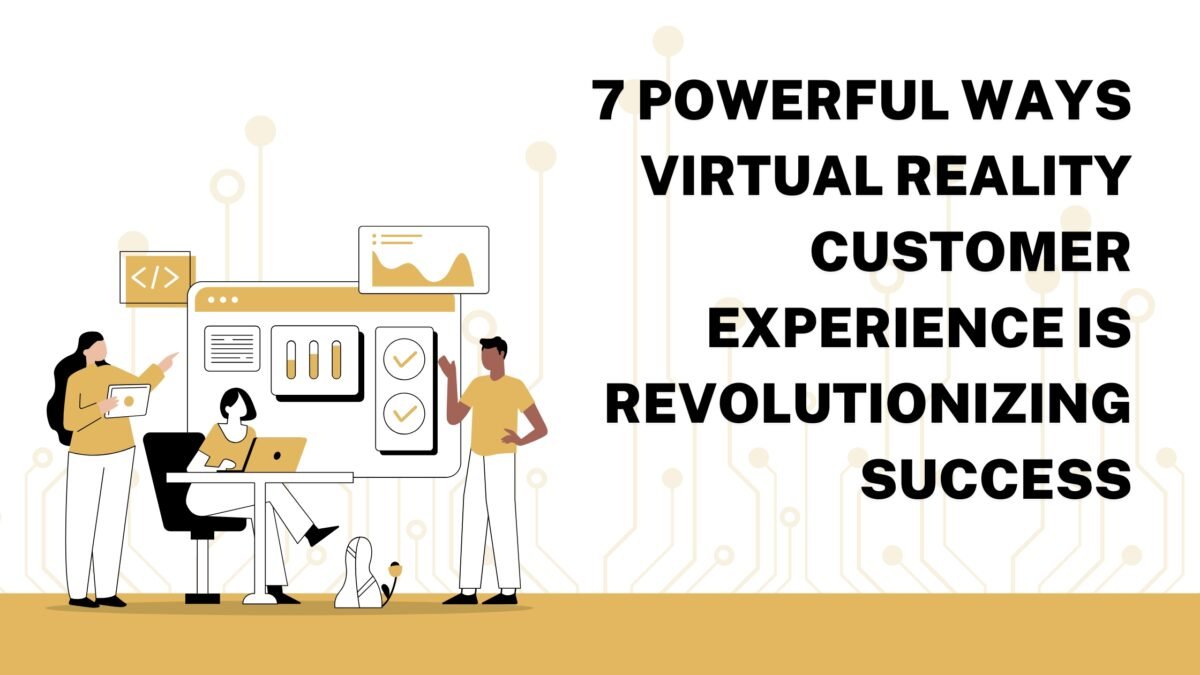
7 Powerful Ways Virtual Reality Customer Experience is Revolutionizing Success
The future of customer engagement is being rewritten, and one technology stands at the forefront of this transformation—Virtual Reality Customer Experience. Once seen as a futuristic dream, virtual reality (VR) today is driving positive disruption across industries, offering brands new ways to deliver unforgettable, immersive journeys for their customers. From retail and hospitality to healthcare and real estate, VR is not just enhancing satisfaction but redefining the very standards of a great customer experience.
In this blog, let’s explore 7 powerful ways Virtual Reality Customer Experience is revolutionizing success in the modern business landscape.
1. Immersive Product Trials Before Purchase
One of the most trusted applications of Virtual Reality Customer Experience is in retail. Imagine trying out a sofa in your living room before purchasing it or test-driving a luxury car without stepping into a showroom. Brands like IKEA and Audi are using VR to empower their audiences with immersive product trials that remove hesitation and elevate confidence. For customers, that means fewer doubts and better satisfaction. For brands, it means fewer returns and more loyalty.
2. Unforgettable Travel and Tourism Previews
The travel and tourism industry has witnessed a major leap forward through Virtual Reality Customer Experience. Travelers no longer need to rely solely on glossy brochures or videos. VR allows them to step inside a hotel suite, stroll through a beach resort, or even explore an entire city before booking. This not only inspires confidence but builds an emotional connection that heavily influences purchase decisions. In an industry where experiences define outcomes, VR creates lasting positive impressions.
3. Next-Level Hospitality Experiences
Hotels and restaurants are integrating Virtual Reality Customer Experience to offer guests behind-the-scenes previews and interactive menus. Imagine donning a VR headset to explore your chosen suite before check-in, or previewing a restaurant’s dishes in 3D before placing an order. This personalized layer of service increases satisfaction, reduces uncertainty, and delights guests with innovation that stands out from the competition.
4. Smarter Real Estate Engagements
The biggest challenge in real estate has long been “visualizing” a space that doesn’t yet exist. Virtual Reality Customer Experience changes that by offering virtual walk-throughs of apartments, offices, and luxury villas—even before construction is complete. Prospective buyers get a better sense of layouts, designs, and finishing touches, leading to faster and more confident decisions. Developers who embrace VR earn a reputation for transparency and customer-first innovation.
5. Transformative Learning and Training Models
VR is making corporate training more engaging, safe, and effective. Instead of traditional slide decks, employees can simulate real-world challenges in immersive training environments. For example, airlines and medical institutions already use Virtual Reality Customer Experience for pilot simulations and surgical practice. Customers directly benefit because a better-trained workforce leads to improved services, greater safety, and sharper precision.
6. Healthcare Journeys That Ease Anxiety
Healthcare is another industry where Virtual Reality Customer Experience is leading remarkable changes. Patients can now take a virtual tour of hospitals and facilities, easing their anxiety before treatment. Doctors use VR to explain complex procedures to patients, improving trust and transparency. From pain distraction therapy to physical rehabilitation programs, VR dramatically improves the emotional and physical side of healthcare journeys.
7. Stronger Emotional Brand Connections
In a world full of choices, emotions drive loyalty. VR enables brands to craft unforgettable storytelling experiences that resonate on a deeply personal level. Automotive brands, for instance, can use Virtual Reality Customer Experience to let users feel the thrill of speeding along a racetrack. Charities can use VR to immerse donors in the causes they support. These emotional journeys anchor stronger trust, engagement, and brand love.
Why Virtual Reality Customer Experience Matters Now More Than Ever
Every touchpoint that customers have with a brand influences their perception, satisfaction, and loyalty. With rising global competition, brands cannot afford generic experiences anymore. The Virtual Reality Customer Experience offers personalization, immersion, and trust-building like no other technology can. Companies adopting VR aren’t just innovating—they’re future-proofing their customer experience strategies.
Final Thoughts: The Positive Future of Virtual Reality Customer Experience
As industries evolve, the ability to stand out depends on how well businesses can connect with their audiences emotionally and experientially. Virtual Reality Customer Experience is no longer a luxury; it is becoming a necessity, shaping how customers interact, decide, and remain loyal. More than just a trend, this shift represents a powerful, positive revolution toward the future of customer engagement. Businesses ready to embrace VR will not just satisfy their audiences—they will delight, inspire, and secure long-term success.